Serola Sacroiliac Belt

Serola Sacroiliac Belt

Price range: $59.95 through $61.00

Manufacturer: Serola Biomechanics, Inc.
UPC: SIBv2
Solution For: Back Pain, Hip Pain, Symphysis Pubis Dysfunction, Pelvic Girdle Dysfunction, Piriformis Syndrome, Leg Pain, Pelvic Pain, Sacroiliac Dysfunction, Pregnancy Pain, Pelvic Torsion, Sciatica, Disc Herniation, Scoliosis, Facet Syndrome

*If you are pregnant, it is strongly recommended to buy the Serola Belt Extender as well. The Extender will give you an extra 8 inches throughout your trimesters.


Product Options:

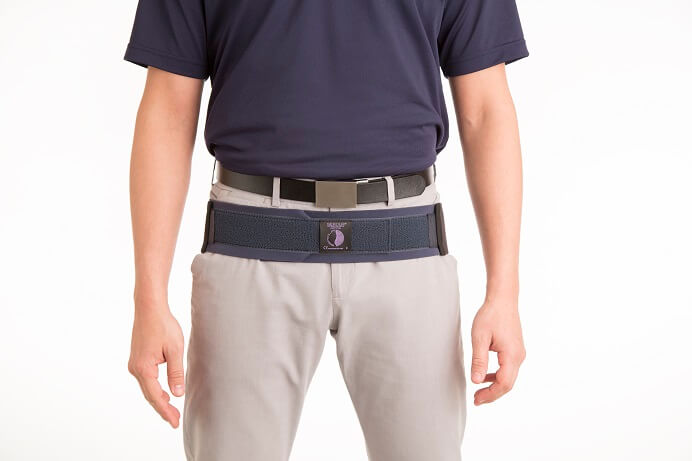
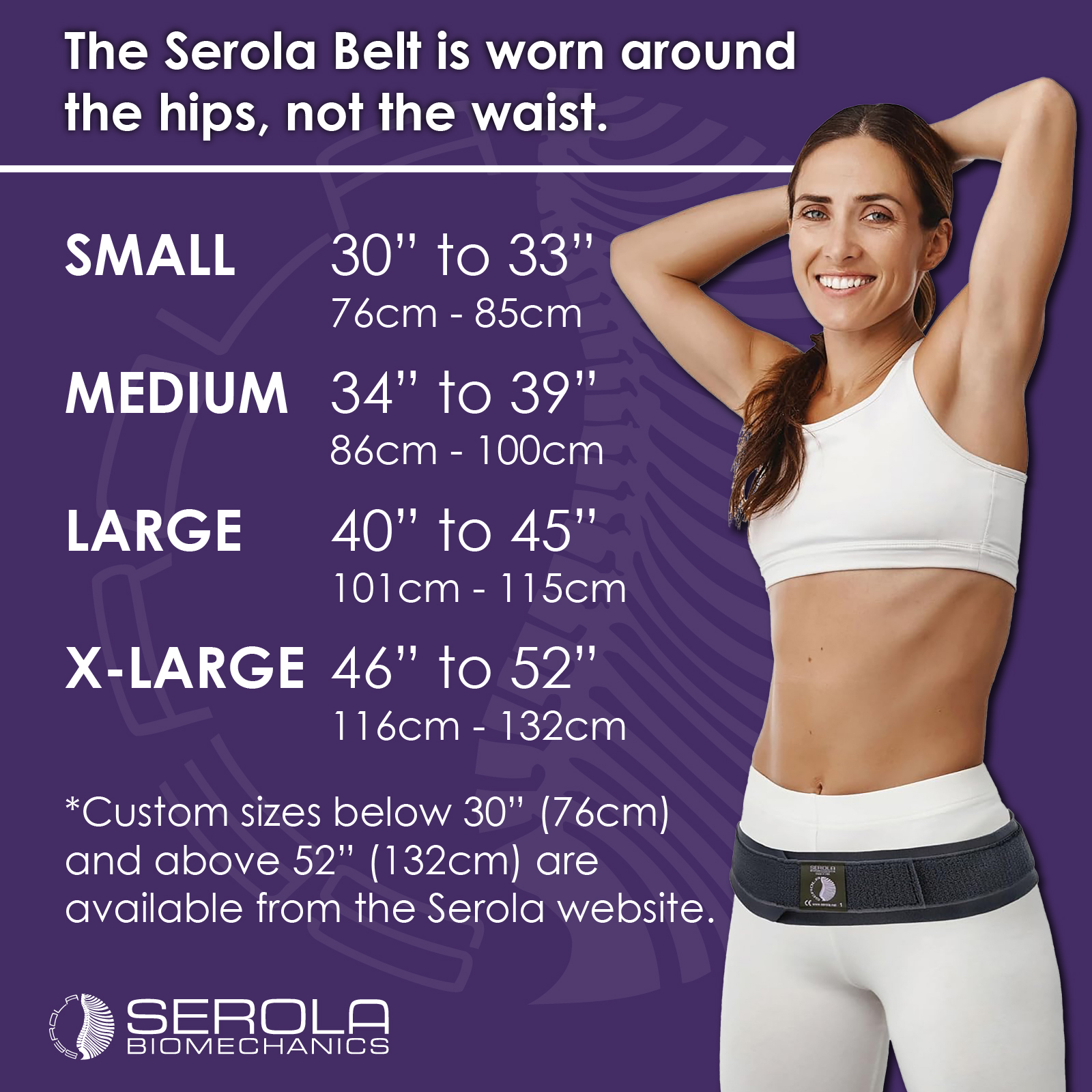
The Serola Belt is worn around the hips, not the waist

Clear

Description

Common Problem

The Sacroiliac Joint is one of the most common underlying causes of back pain today. Sprained ligaments in the sacroiliac region cause imbalanced muscular responses which lead to structural compensation patterns. These patterns are often experienced as muscle spasms or weakness, and back, hip, and leg pain.

How the Serola Sacroiliac Belt Works

The Serola Sacroiliac Belt treats a variety of common problems that result in light, moderate, and even severe back pain. By wrapping the belt around a specific part of the hips, it provides stability to the base of your spine and acts as an external ligament to help put the Sacroiliac Joint back into a normal range of motion. Doing so provides pain relief caused by pulled muscles, ligament stresses or strains, muscle spasms, and pinched nerves in the hips and pelvis. By wearing the Serola Sacroiliac Belt throughout your day, chances of injury are lessened considerably during either work or play.

Provides Relief for:

• Back Pain • Hip Pain • Leg Pain
• Sacroiliac Dysfunction • Pregnancy Pain • Pelvic Torsion
• Leg Length Inequality • Sciatica • Disc Herniation
• Spinal Subluxations • Lateral Canal Stenosis • Facet Syndrome
• Spondylolisthesis • Straight Back Syndrome • Scoliosis

The Serola Difference

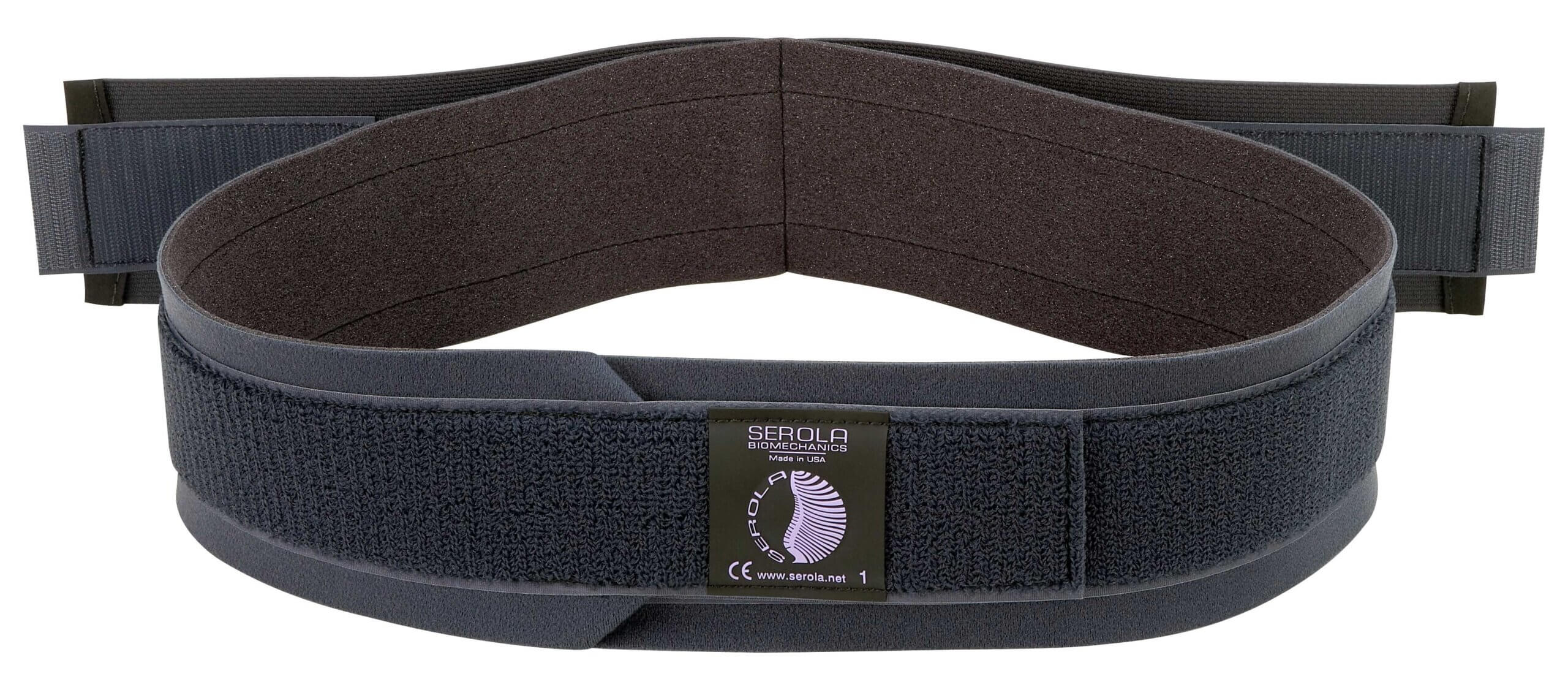
• The Serola Sacroiliac Belt’s patented design makes it the only belt that effectively normalizes the function of the sacroiliac joint.
• Non-elastic layer mimics the action of ligaments and provides a stop point at the end of normal range of motion.
• Elastic layer provides compression to help pull the SIJ together and maintain correct posture
• No irritating buckles or pads
• Takes place of the ligaments, not the muscles, therefore improving muscle function and strength throughout the body
• Can be worn for extended periods without causing muscle weakness or atrophy

Serola vs. Other Products

In choosing the correct belt, you must consider the function of the ligaments:

• Ligaments establish a stopping point at the end of the range of motion
• Ligaments are essentially non-elastic therefore elastic cannot establish a stopping point
• Ligaments do not compress a joint, instead, they allow movement within a normal range of motion
• Ligaments relay position sense to help regulate muscle tone (ligamento-muscular reflex)

Studies have found that correct tension for a sacroiliac belt is about what you would use to tie a shoe. Many products use buckles and other systems that allow too much leverage, which can reduce range of motion below normal and create further irritation. Elastic only belts on the other hand, fail to provide a stop point for excess motion, leading to a false sense of security.

The Serola Sacroiliac Belt has a patented design to combine the best of both layers. Together, these forces support the underlying mechanism of pressure variance and resist harmful stresses placed on the Sacroiliac Joint by bending, lifting, or twisting. The key is to compress the soft tissues of the hips just enough so that when the joint opens, it stops at its normal end of range of motion. The elastic layer is then applied to compress the joint, bring the pelvis back into correct alignment, and improve posture.

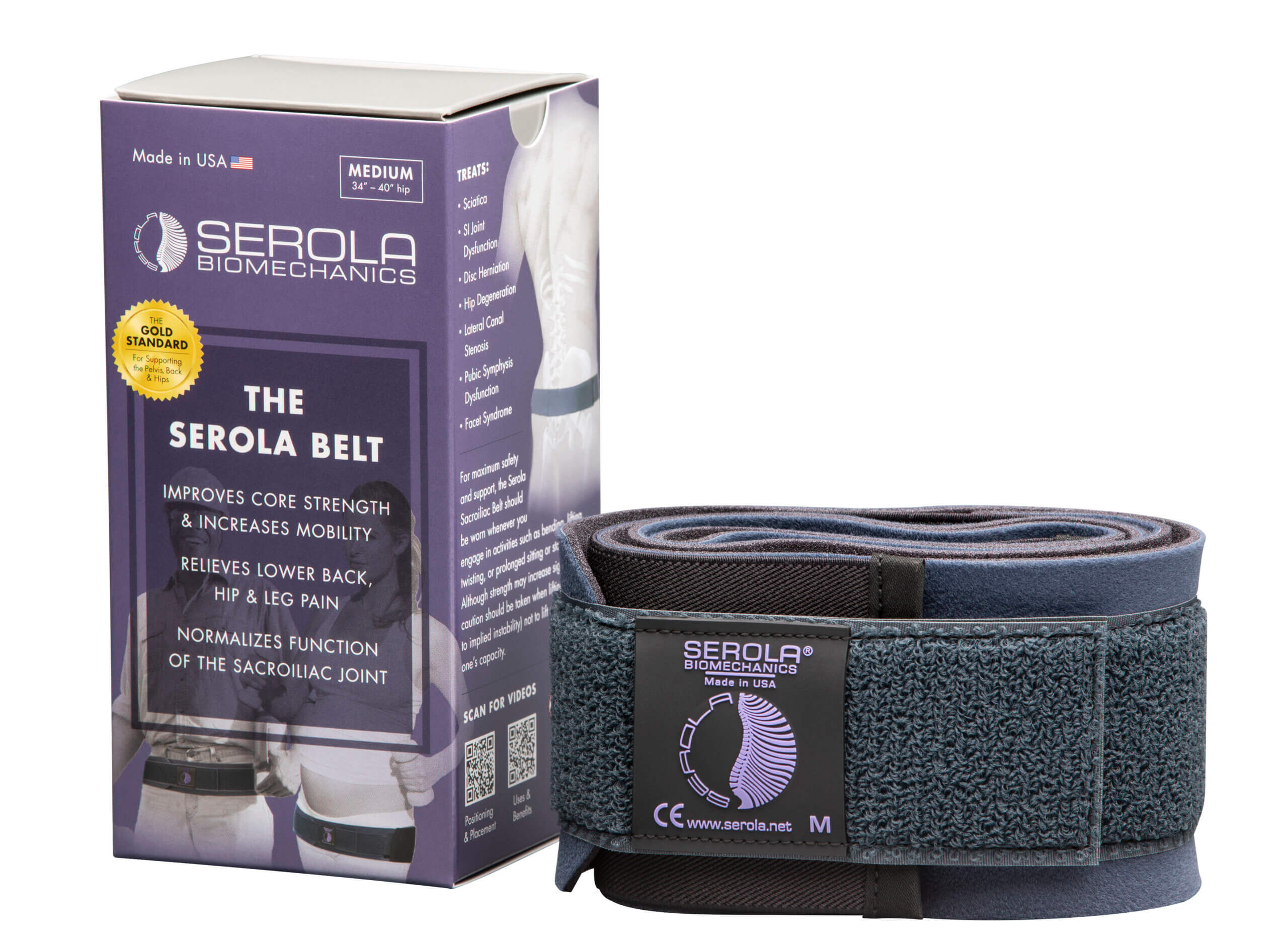
Available in sizes: (See letter on the bottom right corner of the label)

The Serola Belt is worn around the hips, not the waist.

  • Small (30″ to 33″ Hip Measurement)
  • Medium (34″ to 39″ Hip Measurement)
  • Large (40″ to 45″ Hip Measurement)
  • X-Large (46″ to 52″ Hip Measurement)
  • Custom – Only for hip measurements less than 30 inches or more than 52 inches. All other measurements use standard sizes. (costs additional +$3.00, give patient measurement at the checkout)


 

How does the Serola Belt work?

The Serola SI Belt is designed to hold the SIJ together so the likelihood of it opening beyond normal between treatments is greatly reduced. If the joint re-opens, the Serola SI Belt will minimize re-injury to the joint and its ligaments. During rehabilitation, the Serola SI Belt holds the sacrum to the ilia with the proper tension so that, during exercise, as you bring the ilia backward, it carries the sacrum with it. The ligaments are not stressed and the joint remains intact; this is critical to proper rehabilitation. Too much or too little tension will create muscular spasm and inhibition.

How do you measure yourself for the right size?

The measurement is taken directly where the belt is worn. While standing, lift your leg up and feel where the crease near your hips forms. This area is where the belt is worn and the area that should be measured to ensure the correct size is chosen. For more information on positioning and placement of the Serola Sacroiliac Belt, please see our instructional video at https://www.youtube.com/watch?v=YIdOLp5ByWU. If you are using the belt during pregnancy, please see our specific instructional video for pregnancy found at https://www.youtube.com/watch?v=IuOEOOtwIyg

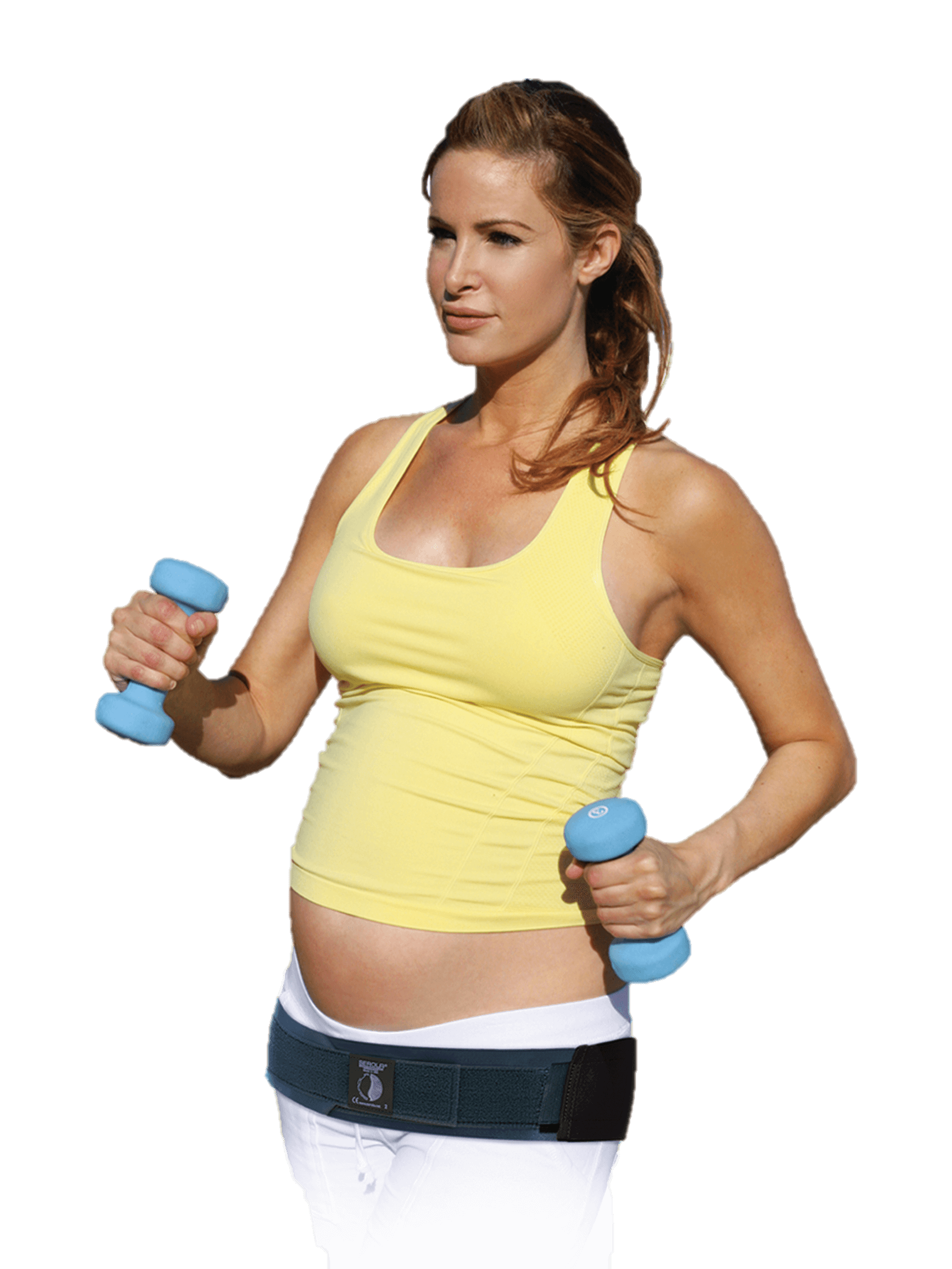
Can the belt be used during Pregnancy?

The Serola Sacroiliac Belt is perfect for use during pregnancy. We made a video discussing all the uses and benefits of the belt during pregnancy found at https://www.youtube.com/watch?v=McVkidV5Kb8

How do I wash the belt?

NEVER USE A MACHINE. Hand wash only. Hot or cold water. Rinse well in cold water to remove soap residue from the small open cells in the foam. Line dry.

What is the difference between the Serola Sacroiliac Belt and a Lumbar Belt?

Lumbar belts focus on replacing or taking place of the muscles. They are designed to increase pressure in the abdomen cavity in order to take stress off the disc but studies have shown this does not actually occur. Lumbar belts should also be worn only with limited use. The Serola Sacroiliac Belt is designed to take place of the ligaments, allowing normal function for the muscles because they are no longer being forced to contract to stabilize the joint and ligaments. Taking the pressure off of the SI Joint results in pain reduction, effectively stronger muscles, better circulation and can be worn all day with no negative effects.

What if the belt causes discomfort?

The belt should not cause any discomfort.  In the majority of cases, the belt is being worn incorrectly and improper positioning can cause discomfort.  Be sure to watch our educational video on how to properly wear the Serola Sacroiliac Belt at https://www.youtube.com/watch?v=YIdOLp5ByWU.  If the belt continues to cause discomfort for any reason after proper placement discontinue use immediately and contact us so we may further assist with the issue.

Can the Serola Sacroiliac Belt be worn directly against the skin?

Yes. The Serola SI Joint Belt is made from a high quality, patented and hypoallergenic foam that can be used against the skin safely. With the SI Joint Belt from Serola supporting you at work, your workday will become more pleasant, less painful, and offer support for your SI joint all day, whether you sit or stand at work.

What is the recommended length of time to wear the Serola Sacroiliac Belt?

The Serola Sacroiliac Belt can be worn 24 hours a day and 7 days a week, even while sleeping.  There is no limitation to how long the belt can be worn and wearing the belt for long periods of time will not cause any negative effects.

What is the importance of using a Serola Sacroiliac Belt during pregnancy?

The importance of using the Serola Sacroiliac Belt during and, especially, after pregnancy cannot be overemphasized. During pregnancy, the ligaments, under hormonal influences, become lax and stretch to allow the pelvis to spread for delivery. It is important to hold the sacroiliac and pubic joints firmly together after delivery in order to assist the ligaments in shortening and realigning the pelvis properly.

Customers Who Bought This Item Also Bought