You are here: Products SEROLA SACROILIAC BELT The Serola Challenge

Try the Serola Challenge

COMPARE THE SEROLA SACROILIAC BELT AGAINST ANY OTHER BELT USING A SIMPLE TEST

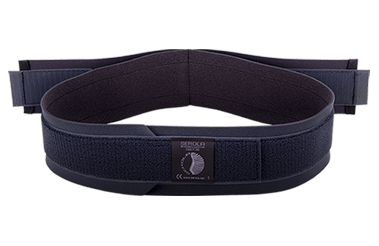
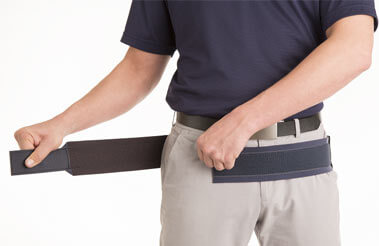
1. Fasten the Serola Sacroiliac Belt securely on the person. (Show Me How)

2. Test the strength of any muscle. One easy test is to have a sitting person raise a foot off the ground and you push down on the thigh. Another easy test is to have a standing person raise an arm and you pull the arm in the opposite direction.

3. Remove the belt and re-test muscle strength.

4. Repeat this test with any other lumbar or sacroiliac belt.


RESULT

Since muscle strength is an indicator of joint integrity, the difference in strength is the difference in support. If the person is stronger with belt on, this indicates that the person may have an unstable sacroiliac joint.

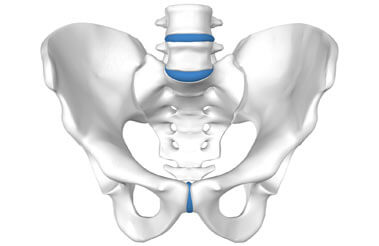
As with any joint, sacroiliac instability causes reactive splinting of the muscles that act to stabilize the joint, as well as inhibition of their antagonists (Arthokinetic Reflex); this can be measured as weakness. Logically, the inhibited muscles are weaker. Also, the splinting muscles are effectively weaker because they are called on to do two things at once, stabilize the sacroiliac joint and resist the examines. Because most major muscles of the body attach to the bones that make up the sacroiliac joint, the weakness caused by their splinting occurs throughout the trunk, hips, and upper legs as these muscles create a self bracing effect.

The Serola Sacroiliac Belt, by stabilizing the sacroiliac joint, re-activates the inhibited muscles and releases the splinting muscles, allowing them to use more of their efforts in their task. This principle applies to any situation that requires effort, including work, sports or play. The person will function better and safer while wearing the Serola Sacroiliac Belt.

Unlike large, bulky lumbar support belts which give muscular support, the slender Serola Sacroiliac Belt supports the ligaments and skeletal structure. Lumbar belts, by replacing weak trunk muscles, further the muscular weakness by promoting disuse atrophy; thus, lumbar belts should be worn only during specific tasks. The Serola Sacroiliac Belt, on the other hand, strengthens the supporting muscles by allowing them to function normally, permitting constant, daily use while giving greater comfort and flexibility.


Joomlart